“Every woman, whether a queen, a CEO, a student, a grandmother, an activist, becomes equal when a perpetrator finds any one of us. Because the pain is the same, the violation is the same, the dehumanization is the same. And therefore, it is important that we look at this as one of the bonds of sisterhood that we must win on together, and win for every woman, everywhere in the world.”
–– Phumzile Mlambo-Ngcuka, 2018
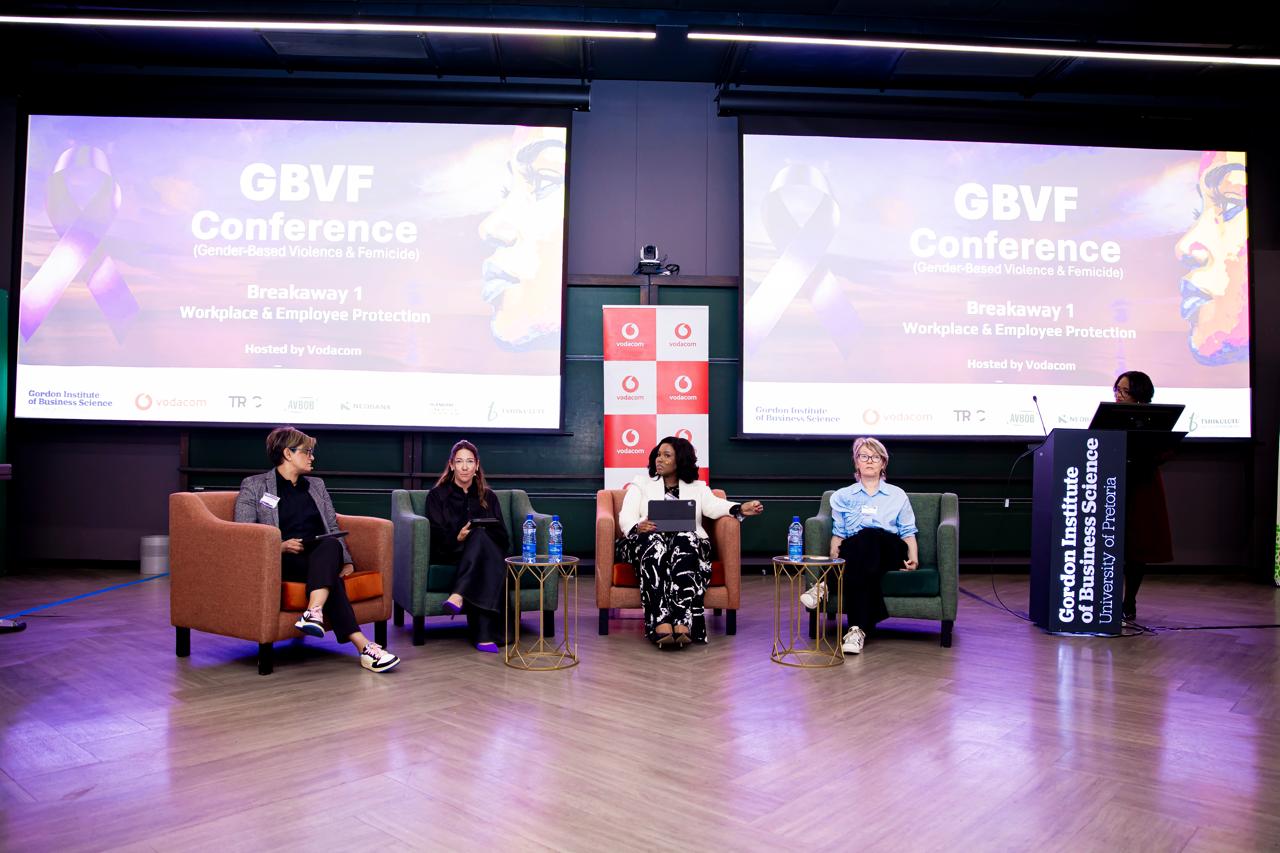
In 2025, gender-based violence and femicide (GBVF) were declared a national crisis and a national disaster in South Africa. This declaration underscores the necessity for business to reflect on this deep-seated challenge. In recognition of this urgency, the GBVF Conference was held on August 5, 2026, to facilitate a dialogue between the private sector, civil society, and government regarding the mitigation of GBVF in the workplace.
The workplace is a microcosm of society; the social ills that exist in communities inevitably enter workplaces. They enter through behaviours such as small jokes and innuendos with sexual connotations that linger and become commonplace in the culture of an organisation. They enter through the scars and trauma that cannot be left at home, or in the car, by survivors of GBVF or by those who have had close contact with it and have been forever scarred by it. GBVF also enters the workplace through perpetrators themselves, who may carry these behaviours into the workplace and perpetrate further harm there.
The behaviours, inequalities, attitudes and violence that exist in our communities do not disappear when people walk through the workplace door. In all these instances, businesses feel the impact through high rates of absenteeism, turnover, reduced productivity, litigation, reputational damage and the loss of talent and trust.
Businesses must therefore consider GBVF not only from a social or moral perspective, but also from an economic one. In 2014, KPMG’s Too Costly to Ignore: The Economic Impact of Gender-Based Violence in South Africa estimated that GBV cost the South African economy at least R28.4 billion to R42.4 billion per year, equivalent to approximately 0.9% to 1.3% of GDP annually. The study considered costs incurred by individuals, families, government, civil society and businesses, including the impact on business through the loss of productivity.
Although this research is more than a decade old and was itself a partial estimate based on the data available at the time, it demonstrates that the economic consequences of GBVF are severe. It further illustrates why business cannot afford to view it as something happening outside of, and separate from, the workplace.
Policies that prohibit sexual harassment and related misconduct may exist, and they are important. South Africa has, for example, ratified ILO Convention 190 on Violence and Harassment, which recognises the right of everyone to a world of work free from violence and harassment. At a domestic level, the Code of Good Practice on the Prevention and Elimination of Harassment in the Workplace provides an important framework for preventing and addressing harassment in the workplace and gives effect to South Africa’s ratification of C190.
However, just as national policies and legislative frameworks can exist while GBVF persists in our communities, workplace policies can also exist while harmful behaviours remain prevalent. The existence of a policy is therefore not, on its own, proof that a workplace is safe.
The strength of organisational policies should therefore not be tested only once an incident of GBVF has occurred in the workplace. The effectiveness of those policies should be evaluated based on their ability to mitigate harm, facilitate reporting, safeguard whistleblowers, and foster a safe work environment that promotes employee well-being.
This requires moving beyond having the right policy to creating the right conditions for safety, trust and accountability. Prevention cannot begin only after a serious incident has occurred. It must happen through everyday interactions, through what organisations say, what they do, what they challenge and what they allow to pass without challenge.
The workplace may be a microcosm of society, but that does not mean that businesses are powerless against what enters through their doors. Organisations can determine what they accept, what they challenge, what they prevent and, ultimately, the kind of workplace culture they create.